Artificial Grass
Se Habla Español
Toll Free 1-800-988-6156    Miami 305.234.5800    Orlando 407-741-3330
GSA ScheduleRecycled Artificial GrassMade in the U.S.A.

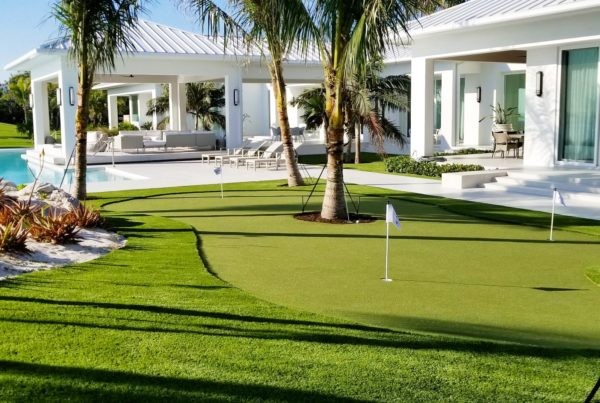
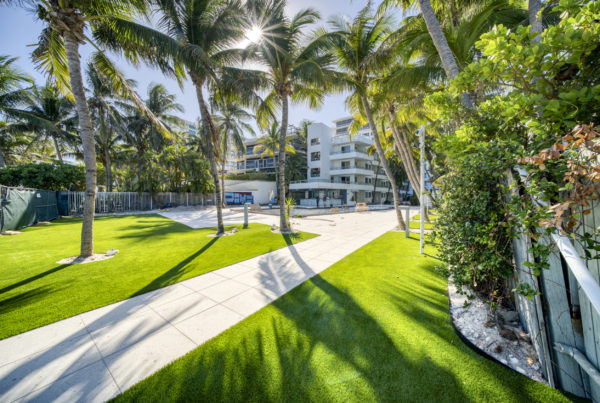
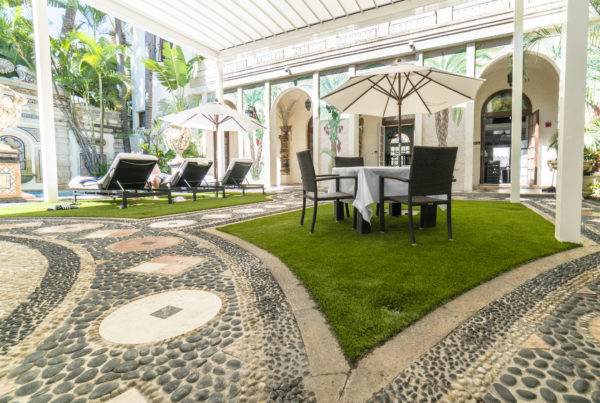
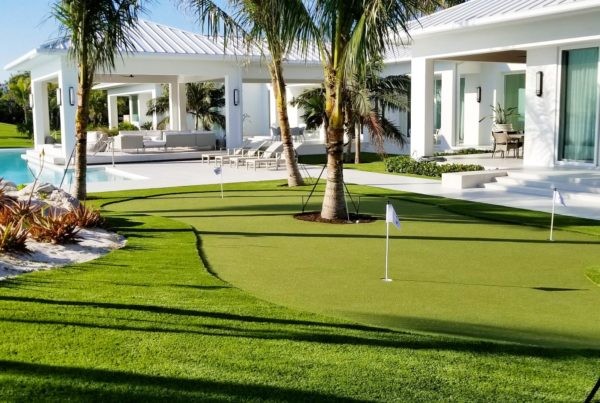
Artificial Grass and Florida artificial grass from Easy Grass works great for both commercial and residential. Miami contractors experienced with the installation of artificial grass. Synthetic grass in miami florida can be installed for your outdoor turf needs! Florida synthetic grass can also be used for your home lawn, putting course and make your playground set safe!

Residential synthetic grass installers * artificial grass installation * residential artificial lawns * artificial turf * backyard * indoor * paintball turf, golf * practice

Miami Synthetic Grass Florida Synthetic Grass Home Commercial

Easy Grass adopts Synthetic Turf Council’s Code of Ethics

July 17th, 2009

Miami, FL- As part of its comittment to continous quality improvement, Easy Grass today adopted a newly released Code of Conduct, published by The Synthetic Turf Council.

In an ongoing effort to ensure that member companies of the Synthetic Turf Council (STC) will maintain the highest level of integrity in their sales and marketing activities, the STC has established the following code of conduct for its member companies.

This Code of Conduct relates to the daily interaction between member companies, including representatives and agents, and potential and existing customers. The Code of Conduct covers all aspects of written and verbal communications that member companies use as part of their sales and marketing activities.

“Member companies agree to hold themselves to the highest standard of conduct when presenting their products and how their products and companies compare with others in the synthetic turf industry.

Member companies will always strive to present their products and/or services in an honest and factually accurate manner; and will avoid making any non-specific negative comments or negative characterizations about a competitor company and/or that company’s products and/or services. Examples of these include, but are not limited to, non-specific comments about a company’s financial stability, vendor payment history, and system performance, that are not based on specific fact or are not a matter of public record.

While understanding that competition in the marketplace will always exist and be a part of our industry, member companies agree to treat other synthetic turf companies with respect in all aspects of their business practices. STC members agree not to disparage other synthetic turf companies, and will conduct their business affairs with integrity and as they would want others to treat them.

Member companies will also strive to ensure that all written communications, advertising and marketing programs will be truthful and accurate, will not appear to validate misinformation that could potentially harm the synthetic turf industry, and will not be considered “unfair” as defined by the FTC. In addition, member companies will agree that they will have a “reasonable basis” (as defined by the FTC) for all claims made in written advertisements and other written marketing documents.”

Bernie Torra, STC Public Relations Committee Chairman and Vice President of Easy Grass, LLC said, “The goal of this Code of Conduct is to encourage all member companies to conduct themselves in an honest and forthright manner, to present their products and services in a positive and factually accurate way, and in doing so, eliminate the negative perception that customers have had of the synthetic turf business for many years.”

If you have questions about this Code of Conduct, please feel free to contact Bernie Torra at (305) 234-5800 or at bernie@easygrass.net.


Easy Grass LLC, partners with Polytan, a global leader in synthetic sports surfaces

July 17th, 2009

Coral Gables, FL – Easy Grass, LLC formally announced its association with Polytan USA,  a global leader in synthetic sports surfaces and running track systems since 1969.

Polytan-USA CEO, Josef Langenwalter told those in attendance “We were quite impressed with the energy, market knowledge and vision of the Easy Grass partners the very first time we met”  “We are confident this partnership will serve to further expand our US brand presence and ultimately grow market share  in Florida and the Caribbean region.” 

A global leader, Polytan has been manufacturing and installing sports surfaces worldwide since 1969. Polytan is the only fully vertically integrated producer & installer of artificial turf and running track systems worldwide. This vertical integration allows Polytan the unique advantage of controlling the quality standards from raw materials through to the installation ensuring the highest quality at every level for every project.  Polytan not only holds the distinction of holding the most FIFA 2 Star certificates worldwide, they are the only company to have achieved successful 2 Star Certification under the world soccer governing body, FIFA, for the fourth consecutive year at The Red Bull Stadium in Salzburg, Austria. Polytan-USA, based in Marietta, Georgia, is now focused on bringing the world’s most highly acclaimed artificial turf and running track systems to the North American sports market through a national “partnership” network.

Easy Grass, LLC, and its subsidiaries based in South Florida, is a manufacturer, supplier, installer and service provider of superior synthetic turf systems for lawns, landscapes, putting greens and sports fields.  “Our partnership with Polytan USA, allows us to offer athletic directors, field planners and most importantly athletes, the world’s most advanced playing surface technology. FIFA certification is one of the most recognized, exacting lab and onsite testing standards for playing fields in the world. For any field to be FIFA certified once is impressive, to receive four consecutive certifications speaks volumes of Polytan’s dedication to continuous quality improvement and  commitment to develop superior play properties and surface longevity”,  said Bernie Torra, Easy Grass spokesman.   

 For more information visit www.easygrass.net or call (305) 234-5800.


U.S. Consumer Product Safety Commission Validates Synthetic Turf Fields OK to Install, OK to

July 17th, 2009

WASHINGTON, D.C. – The U.S. Consumer Product Safety Commission (CPSC) staff today released its

evaluation of various synthetic athletic fields. The evaluation concludes that young children are not at risk from

exposure to lead in these fields.

CPSC staff evaluation showed that newer fields had no lead or generally had the lowest lead levels. Although

small amounts of lead were detected on the surface of some older fields, none of these tested fields released

amounts of lead that would be harmful to children.

Lead is present in the pigments of some synthetic turf products to give the turf its various colors. Staff recognizes

that some conditions such as age, weathering, exposure to sunlight, and wear and tear might change the amount

of lead that could be released from the turf. As turf is used during athletics or play and exposed over time to

sunlight, heat and other weather conditions, the surface of the turf may start to become worn and small particles

of the lead-containing synthetic grass fibers might be released. The staff considered in the evaluation that

particles on a child’s hand transferred to his/her mouth would be the most likely route of exposure and determined

young children would not be at risk.

Although this evaluation found no harmful lead levels, CPSC staff is asking that voluntary standards be developed

for synthetic turf to preclude the use of lead in future products. This action is being taken proactively to address

any future production of synthetic turf and to set a standard for any new entrants to the market to follow.

As an overall guideline, CPSC staff recommends young children wash their hands after playing outside,

especially before eating.


Synthetic Turf Industry Announces 20% Growth in 2008

July 17th, 2009

Growth rate creates thousands of jobs and conserves over 500 million gallons of water

(Atlanta, Ga.)


– Despite the recession, thousands of jobs have been created by the

synthetic turf industry according to the Synthetic Turf Council, which today announced a

20% expansion rate for 2008. Growth in all sectors of the industry — sports fields, golf,

municipal parks, airports, landscape and residential – has also helped conserve an

additional 500 million gallons of water during a time when many sectors of the country

still grapple with drought.

“Our member companies are actively creating jobs and bolstering local economies with

their growth,” explains Rick Doyle, President of the Synthetic Turf Council. “Industry

expansion also allows us to make a positive impact on the environment by conserving

water, lowering the usage of pesticides and fertilizers and recycling materials.”

The environmental impact of synthetic turf fields is significant. It is common for grass

sports fields to require a minimum of 15,000 gallons of irrigation water per week during

growing season and thousands of pounds of fertilizers and pesticides annually.

Assuming a 33 week growing season, the installation of over 1,000 new synthetic turf

fields last year conserved an estimated 500 million gallons of water and reduced the use

of fertilizers by well over 1.25 million pounds. With approximately 4,500 synthetic turf

fields currently in use, the total amount of water saved in 2008 exceeded 2.2 billion

gallons – enough water to supply the average home for 75 years.


Demand for synthetic turf has grown over the past few years. About half of all NFL

teams currently play their games on synthetic turf, and it has been approved by FIFA for

World Cup soccer matches. As the need for durable playing fields escalates, especially

those that don’t require high water usage during times of drought, synthetic turf has

become an increasingly popular solution to enhance athletic performance, deal with the

issue of limited space in older cities and suburbs, and allow for multiple sports teams to

practice and play on a grass-like surface.

The increased popularity of synthetic turf has also resulted in increased scrutiny. In July

2008, a U.S. Consumer Product Safety Commission Staff report approved the use of

synthetic turf fields by children and people of all ages. Numerous independent, current,

and credible scientific studies that verify the usage benefits and address the health, safety,

and environmental impact of synthetic turf are posted on the Synthetic Turf Council’s

website at 

www.syntheticturfcouncil.org

.

About the Synthetic Turf Council:

Based in Atlanta, the Synthetic Turf Council was founded in 2003 to promote the

industry and to assist buyers and end users with the selection, use and maintenance of

synthetic turf systems in sports field, golf, municipal parks, airports, landscape and

residential applications. The organization is also a resource for current, credible, and

independent research on the safety and environmental impact of synthetic turf.

Membership includes builders, landscape architects, testing labs, maintenance providers,

manufacturers, suppliers, installation contractors, infill material suppliers and other

specialty service companies. For more information, visit


www.syntheticturfcouncil.org.


U.S. Consumer Product Safety Commission Validates Safety of Lead Chromate in Synthetic Turf and STC Announces Voluntary Reduction Standards

July 17th, 2009

Atlanta, Ga. The U.S. Consumer Product Safety Commission (CPSC) announced today that synthetic turf fields are okay to install and play on for children and people of all ages. The CPSC evaluation of old and newer synthetic turf fields concludes that “young children are not at risk from exposure to lead in these fields.” Their full statement is accessible at: http://www.cpsc.gov/cpscpub/prerel/prhtml08/08348.html

Immediately following the CPSC’s call for the development of voluntary standards to eventually eliminate lead from synthetic turf, the Synthetic Turf Council announced its proactive plans to achieve that goal.

“The Synthetic Turf Council fully supports the efforts by the CPSC, EPA, and CDC to eliminate lead in all products where feasible,” says Rick Doyle, President of the Association.

“With this commitment, we are voluntarily agreeing to reduce lead levels in accordance with the proposed Consumer Product Safety Improvement Act of 2008, and to the same strict standards Congress is likely to impose on the children’s toy industry.”

STC’s Voluntary Commitment

Throughout the years, the synthetic turf industry has developed and tested new pigment formulations to enable the removal of all or most of the lead from over 90% of the pigments used to color synthetic turf. Now the STC plans to reduce lead levels in the remaining 10% of all colored fibers that still require lead chromate to meet the consumer’s demand for long-term colorfastness.

The STC voluntarily agrees to comply with the revised lead restrictions currently proposed for children’s products in H.R. 4040. Specifically, the level of lead will be reduced in all pigments used to color synthetic turf to 300 ppm or less by no later than January 1, 2010, and to 100 ppm or less by no later than January 1, 2012.

About the Synthetic Turf Council

Based in Atlanta, the Synthetic Turf Council was founded in 2003 to promote the industry and to assist buyers and end users with the selection, use and maintenance of synthetic turf systems in sports field, golf and landscape applications.  The organization is also a resource for current, credible, and independent research on the safety and environmental impact of synthetic turf. STC members produce and install most of the synthetic turf sports fields in North America. Membership includes builders, landscape architects, testing labs, maintenance providers, installation contractors, infill material suppliers and other specialty service companies. For more information, visit www.syntheticturfcouncil.org.


Synthetic Turf: Research Verifies Numerous Usage Benefits and Minimal Health & Environmental Risks

July 17th, 2009

These days, synthetic turf seems to be everywhere.  It empowered the Barrow Whalers to become the first Arctic high school football team in northern Alaska, helped Lakeland High School in Shrub Oak, New York win the New York State Field Hockey Championship in 2006 and was even endorsed by ABC sportscasters during their November 26, 2007 broadcast of the Pittsburgh Steelers-Miami Dolphins game, when a rain-soaked layer of newly installed sod turned Heinz Field into a veritable mud pit.

The escalating need for durable fields that accommodate multiple sports teams, coupled with increasing maintenance, water usage costs and climatic shifts, have prompted a rising number of schools and parks to turn to synthetic turf to balance their program needs.  Today’s synthetic turf is designed to simulate the experience of practicing and playing on a grass-like surface year round. Demand has grown to the point where over 800 multi-use synthetic turf sports fields are installed annually in North American schools, colleges, parks and professional sports stadiums.  About half of all NFL teams currently play their games on synthetic turf, and it has been recently been approved for World Cup soccer matches.

The Issue

As the popularity of synthetic turf escalates, so does scrutiny about its usage. Insightful and responsible questions are being asked regarding synthetic turf’s potential negative impact on the environment and health of its users. The STC acknowledges the concerns of parents, school boards, athletic directors, local officials and environmental and regulatory groups in this regard. As the industry’s trade organization, it is our responsibility to address these issues in an unbiased and judicious manner.

During the past decade, much independent, credible research about synthetic turf has been conducted worldwide, and is ongoing. Reputable governmental bodies and scientists in Norway, Sweden, Canada, Great Britain, New Jersey, California and Connecticut, international sports organizations such as FIFA (the international governing body on soccer), and trade institutes have examined the health and environmental aspects of synthetic turf.  Their exhaustive efforts have concluded that there is every reason to use synthetic turf while perceived or proposed environmental and health problems have a negligible impact.

Further, to date, no state or federal agency has banned or restricted the use of artificial turf. In fact, environmental health officials in Connecticut recently pronounced that the chemical compounds associated with the infill material from recycled rubber tires used in this technology posed no danger to human health or the environment.

Environmental Advantages of Synthetic Turf

Crumb used tire rubber has been safely utilized in synthetic turf sports fields since it was introduced in 1997, and in playgrounds and tracks for much longer.  The U.S. EPA’s position is that scrap tires are not a hazardous waste, and recommends using crumb material from granulated used tires for playgrounds, running tracks, and sports fields.  This decree has afforded the opportunity to recycle 25 million used auto tires per year, tires that would otherwise end up in U.S. landfills.

A well-maintained natural turf field requires consistent irrigation and ongoing applications of both fertilizers and pesticides. It is not uncommon for grass fields to require 50,000 gallons or more of irrigation water per week during growing season and thousands of pounds of fertilizers and pesticides annually. Synthetic turf fields substantially decrease water usage, essentially eliminate chemical treatments and reduce the man hours and power equipment operation needed to maintain a grass field.

User Benefits of Synthetic Turf

Increasing demand for higher quality playing surfaces and intense competition for field accessibility have given rise to a new generation of synthetic turf systems that replicate the look and feel of manicured natural grass. Synthetic turf is supplanting its grass counterpart in record numbers because of the numerous benefits it affords, including:  exponentially increased playing time, as synthetic turf can be used daily and in all types of weather, without worry of damage; improved playability, as synthetic turf fields remain uniform and consistent, season after season; increased safety, because the fields are infilled with resilient materials that provide a level of impact attenuation that is difficult to sustain on worn down, over-used natural turf fields; reduced maintenance costs; and environmental friendliness in terms of origin, application, use, disposal, sustainability and resource conservation.  In addition, while turf grass managers recommend against using a natural field for more than 20 – 24 hours per week or 680 to 816 hours per year for a three season window, synthetic turf can be utilized around 3,000 hours per year with no “rest” required.

STC Position

At STC, we believe that reliable scientific data should be the foundation of any discussion regarding synthetic turf’s safety and utility. After reviewing the available research from a diverse group of third party experts, our organization is confident that the benefits of synthetic turf to players, schools, communities and the environment are documented and substantially outweigh any potential, minimal risks.

Claims of toxicity are generally based on extreme laboratory testing such as the use of solvents and high temperatures to generate pollutants.  Rarely replicating actual field conditions, this laboratory work does not represent realistic material characteristics.  More often than not, even with laboratory testing, results in levels of pollutants are below existing background levels within the environment.  Given these facts, the environmental concerns have been deemed insignificant by third-party experts.  This position is consistent with recommendations of regulating agencies and organizations, such as the U.S. EPA and FIFA, that sports fields is an acceptable use for recycled SBR tire rubber.

Individuals need to weigh the facts themselves to determine if synthetic turf best meets their needs. A collection of unfiltered, credible studies conducted by experts worldwide have been posted on our Web site (www.syntheticturfcouncil.org) for review.  In addition, we have launched a Public Outreach & Education Campaign to provide answers to commonly asked questions, as well as educational materials and position papers.

About the Synthetic Turf Council

Based in Atlanta, the Synthetic Turf Council was founded in 2003 to serve as an objective resource assisting buyers and end users with the selection, use, and maintenance of synthetic turf systems in sports field, golf, and landscape applications.   The organization actively collects reputable studies and research, as well as official statements by governmental agencies and sports organizations, which address the impact of synthetic turf sports fields.  STC members produce and install most of the synthetic turf sports fields in North America.  Membership includes builders, landscape architects, testing labs, maintenance providers, installation contractors and other specialty service companies.  For more information, visit (www.syntheticturfcouncil.org).